
Subaru EyeSight Recalibration After Windshield Replacement



Subaru EyeSight Recalibration After Windshield Replacement: What to Expect
Replacing a Subaru windshield is not the same as replacing glass on a conventional vehicle. Subaru's EyeSight Driver Assist Technology uses two cameras mounted at the top of the windshield to power critical safety features. When the windshield is replaced, those cameras must be precisely recalibrated before EyeSight will function correctly. Skipping or improperly performing that recalibration puts your safety systems at risk.
What Is Subaru EyeSight and Why Does It Depend on the Windshield?
Subaru EyeSight is a camera-based driver assistance system that has been standard on most Subaru models since 2019. Unlike radar-based systems that are mounted in the grille or bumper, EyeSight relies entirely on two stereo cameras positioned behind the windshield near the rearview mirror. Those cameras read the road ahead to detect vehicles, pedestrians, and lane markings in real time, powering features including:
- Adaptive cruise control with lane centering
- Pre-collision braking
- Lane departure and sway warning
- Automatic emergency steering
Because the cameras sit directly behind the glass, the windshield is part of the optical system. The angle, clarity, and positioning of the glass all affect how accurately the cameras interpret what they see. A new windshield, even one installed with perfect precision, changes the optical environment enough that the cameras need to be reset and realigned to function as Subaru designed.
What Happens If EyeSight Is Not Recalibrated After Windshield Replacement?
If the EyeSight cameras are not properly recalibrated after a windshield replacement, the system may display a warning light, disable itself automatically, or continue operating with misaligned camera data. Misalignment that is not obvious enough to trigger a warning is the most dangerous scenario: the system appears to be working normally but is detecting lanes, distances, and objects with reduced accuracy. Features like automatic emergency braking, automatic emergency steering, and lane keep assist can behave unpredictably or fail to engage when needed.
Subaru recommends that EyeSight recalibration be performed by a trained technician with the correct equipment any time the windshield is removed or replaced.
The Subaru EyeSight Recalibration Process
EyeSight recalibration is a two-stage process that must be completed after a windshield replacement:
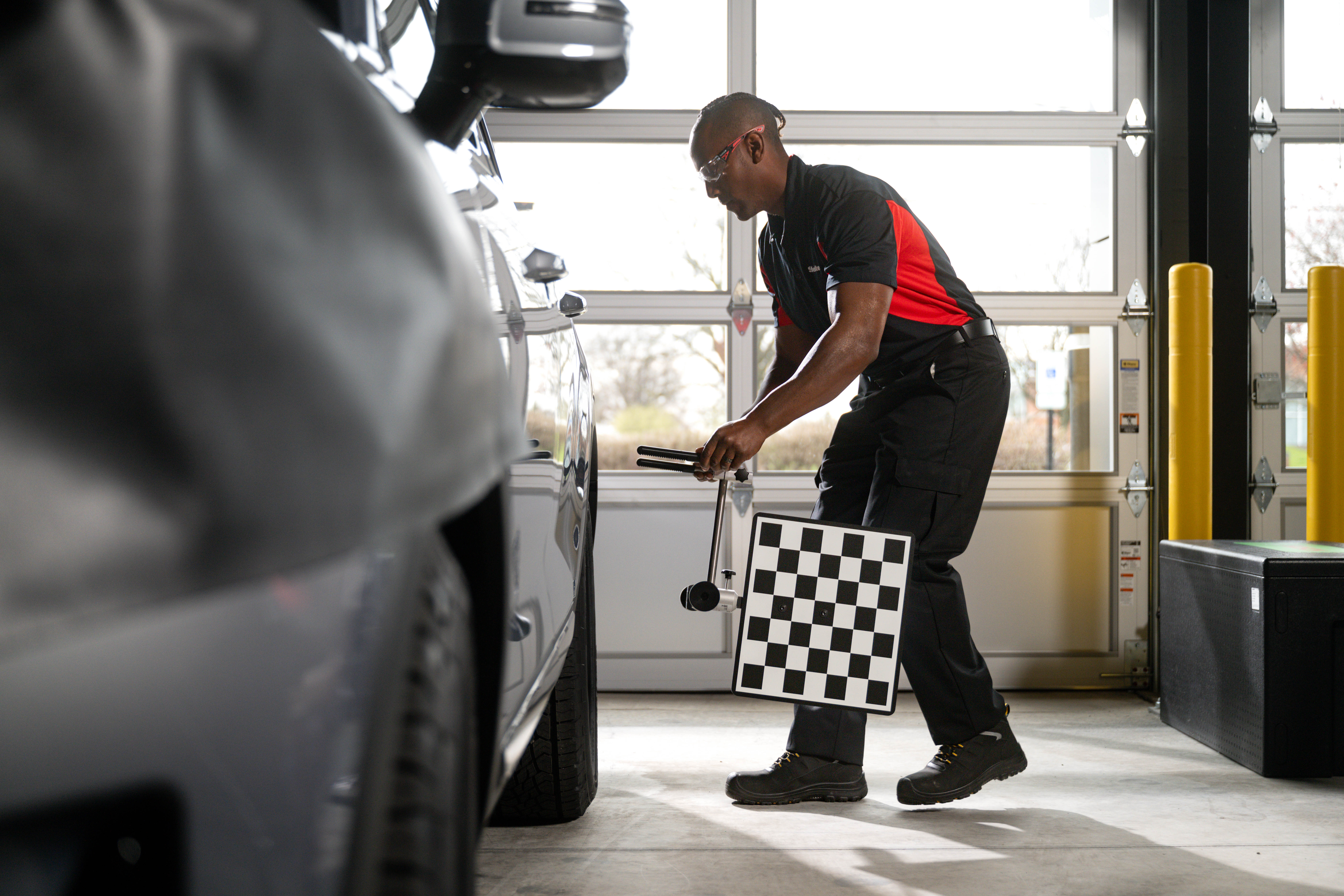
Static recalibration is performed first. The vehicle is positioned in a controlled environment with specific recalibration targets placed at precise distances and angles in front of the cameras. Specialized software connects to the vehicle's systems and uses the targets to reset the camera alignment parameters. The environment must meet specific requirements for lighting and space for the recalibration to be performed correctly.
Dynamic recalibration follows. The vehicle is driven under specific conditions, typically on a road with clear lane markings at a sustained speed, allowing the cameras to verify their alignment against real-world inputs. Depending on the model and the recalibration equipment used, this drive cycle can take anywhere from a few miles to over twenty miles to complete.
When you schedule your appointment with Safelite, we’ll confirm upfront whether your Subaru requires static calibration, dynamic calibration, or both, so there are no surprises on the day of your appointment. Both stages must be completed successfully before EyeSight is fully operational.
Choosing the Right Service Provider for Subaru Windshield Replacement
Not every auto glass shop has the equipment or training to perform Subaru EyeSight recalibration correctly. When evaluating service providers, confirm that the shop has technicians trained in ADAS recalibration and experience specifically with Subaru EyeSight. Ask whether they perform both static and dynamic recalibration and whether their equipment is compatible with your model year.
Glass selection also matters. Subaru windshields include specific acoustic properties and coatings, and the camera mounting bracket must align precisely with the new glass. OEM or OEM-equivalent glass ensures the optical properties and mounting geometry meet Subaru's specifications. Aftermarket glass that does not meet those specifications can affect recalibration accuracy even when the recalibration process itself is performed correctly.
Subaru EyeSight Calibration You Can Count On
At Safelite, our technicians are trained to handle Subaru windshield replacement and EyeSight camera recalibration using the specialized equipment Subaru's system requires. We perform recalibration according to Subaru's manufacturer specifications, and you will be notified at scheduling which type of recalibration your vehicle needs so you know exactly what to expect. We use quality glass and back our work with the Safelite Nationwide Lifetime Warranty.
Schedule your Subaru windshield service today and get back on the road with EyeSight fully operational.
Frequently Asked Questions
Q: Does Subaru EyeSight need to be recalibrated after windshield replacement?
A: Yes. EyeSight cameras are mounted directly behind the windshield and must be recalibrated any time the windshield is removed or replaced. Without proper recalibration, EyeSight may disable itself or operate with reduced accuracy, compromising features like automatic emergency braking, automatic emergency steering, and lane keep assist.
Q: How long does Subaru EyeSight recalibration take?
A: The full recalibration process, including both static and dynamic recalibration, typically takes one to three hours depending on the model and the service provider's equipment. Dynamic calibration requires a drive cycle under specific conditions, which adds time beyond the static calibration.
Q: Can any auto glass shop recalibrate Subaru EyeSight?
A: No. EyeSight recalibration requires specific recalibration targets, software, and a controlled environment for the static recalibration process. Not all auto glass shops have this equipment. Confirm that your service provider is trained and equipped for Subaru EyeSight recalibration before scheduling the service.
Q: What happens if Subaru EyeSight is not recalibrated after windshield replacement?
A: EyeSight may display a warning and disable itself, or it may continue operating with misaligned camera data. In either case, safety features like automatic emergency braking, adaptive cruise control, automatic emergency steering, and lane keep assist will not function as designed. Proper recalibration is essential before relying on any EyeSight features.
Q: Does my insurance cover Subaru EyeSight recalibration after windshield replacement?
A: Many comprehensive auto insurance policies cover ADAS recalibration as part of a windshield replacement claim. Coverage varies by policy and provider, so check with your insurer before scheduling service to understand what is included.
Replacing a Subaru windshield is not the same as replacing glass on a conventional vehicle. Subaru's EyeSight Driver Assist Technology uses two cameras mounted at the top of the windshield to power critical safety features. When the windshield is replaced, those cameras must be precisely recalibrated before EyeSight will function correctly. Skipping or improperly performing that recalibration puts your safety systems at risk.
What Is Subaru EyeSight and Why Does It Depend on the Windshield?
Subaru EyeSight is a camera-based driver assistance system that has been standard on most Subaru models since 2019. Unlike radar-based systems that are mounted in the grille or bumper, EyeSight relies entirely on two stereo cameras positioned behind the windshield near the rearview mirror. Those cameras read the road ahead to detect vehicles, pedestrians, and lane markings in real time, powering features including:
- Adaptive cruise control with lane centering
- Pre-collision braking
- Lane departure and sway warning
- Automatic emergency steering
Because the cameras sit directly behind the glass, the windshield is part of the optical system. The angle, clarity, and positioning of the glass all affect how accurately the cameras interpret what they see. A new windshield, even one installed with perfect precision, changes the optical environment enough that the cameras need to be reset and realigned to function as Subaru designed.
What Happens If EyeSight Is Not Recalibrated After Windshield Replacement?
If the EyeSight cameras are not properly recalibrated after a windshield replacement, the system may display a warning light, disable itself automatically, or continue operating with misaligned camera data. Misalignment that is not obvious enough to trigger a warning is the most dangerous scenario: the system appears to be working normally but is detecting lanes, distances, and objects with reduced accuracy. Features like automatic emergency braking, automatic emergency steering, and lane keep assist can behave unpredictably or fail to engage when needed.
Subaru recommends that EyeSight recalibration be performed by a trained technician with the correct equipment any time the windshield is removed or replaced.
The Subaru EyeSight Recalibration Process
EyeSight recalibration is a two-stage process that must be completed after a windshield replacement:
Static recalibration is performed first. The vehicle is positioned in a controlled environment with specific recalibration targets placed at precise distances and angles in front of the cameras. Specialized software connects to the vehicle's systems and uses the targets to reset the camera alignment parameters. The environment must meet specific requirements for lighting and space for the recalibration to be performed correctly.
Dynamic recalibration follows. The vehicle is driven under specific conditions, typically on a road with clear lane markings at a sustained speed, allowing the cameras to verify their alignment against real-world inputs. Depending on the model and the recalibration equipment used, this drive cycle can take anywhere from a few miles to over twenty miles to complete.
When you schedule your appointment with Safelite, we’ll confirm upfront whether your Subaru requires static calibration, dynamic calibration, or both, so there are no surprises on the day of your appointment. Both stages must be completed successfully before EyeSight is fully operational.
Choosing the Right Service Provider for Subaru Windshield Replacement
Not every auto glass shop has the equipment or training to perform Subaru EyeSight recalibration correctly. When evaluating service providers, confirm that the shop has technicians trained in ADAS recalibration and experience specifically with Subaru EyeSight. Ask whether they perform both static and dynamic recalibration and whether their equipment is compatible with your model year.
Glass selection also matters. Subaru windshields include specific acoustic properties and coatings, and the camera mounting bracket must align precisely with the new glass. OEM or OEM-equivalent glass ensures the optical properties and mounting geometry meet Subaru's specifications. Aftermarket glass that does not meet those specifications can affect recalibration accuracy even when the recalibration process itself is performed correctly.
Subaru EyeSight Calibration You Can Count On
At Safelite, our technicians are trained to handle Subaru windshield replacement and EyeSight camera recalibration using the specialized equipment Subaru's system requires. We perform recalibration according to Subaru's manufacturer specifications, and you will be notified at scheduling which type of recalibration your vehicle needs so you know exactly what to expect. We use quality glass and back our work with the Safelite Nationwide Lifetime Warranty.
Schedule your Subaru windshield service today and get back on the road with EyeSight fully operational.
Frequently Asked Questions
Q: Does Subaru EyeSight need to be recalibrated after windshield replacement?
A: Yes. EyeSight cameras are mounted directly behind the windshield and must be recalibrated any time the windshield is removed or replaced. Without proper recalibration, EyeSight may disable itself or operate with reduced accuracy, compromising features like automatic emergency braking, automatic emergency steering, and lane keep assist.
Q: How long does Subaru EyeSight recalibration take?
A: The full recalibration process, including both static and dynamic recalibration, typically takes one to three hours depending on the model and the service provider's equipment. Dynamic calibration requires a drive cycle under specific conditions, which adds time beyond the static calibration.
Q: Can any auto glass shop recalibrate Subaru EyeSight?
A: No. EyeSight recalibration requires specific recalibration targets, software, and a controlled environment for the static recalibration process. Not all auto glass shops have this equipment. Confirm that your service provider is trained and equipped for Subaru EyeSight recalibration before scheduling the service.
Q: What happens if Subaru EyeSight is not recalibrated after windshield replacement?
A: EyeSight may display a warning and disable itself, or it may continue operating with misaligned camera data. In either case, safety features like automatic emergency braking, adaptive cruise control, automatic emergency steering, and lane keep assist will not function as designed. Proper recalibration is essential before relying on any EyeSight features.
Q: Does my insurance cover Subaru EyeSight recalibration after windshield replacement?
A: Many comprehensive auto insurance policies cover ADAS recalibration as part of a windshield replacement claim. Coverage varies by policy and provider, so check with your insurer before scheduling service to understand what is included.